



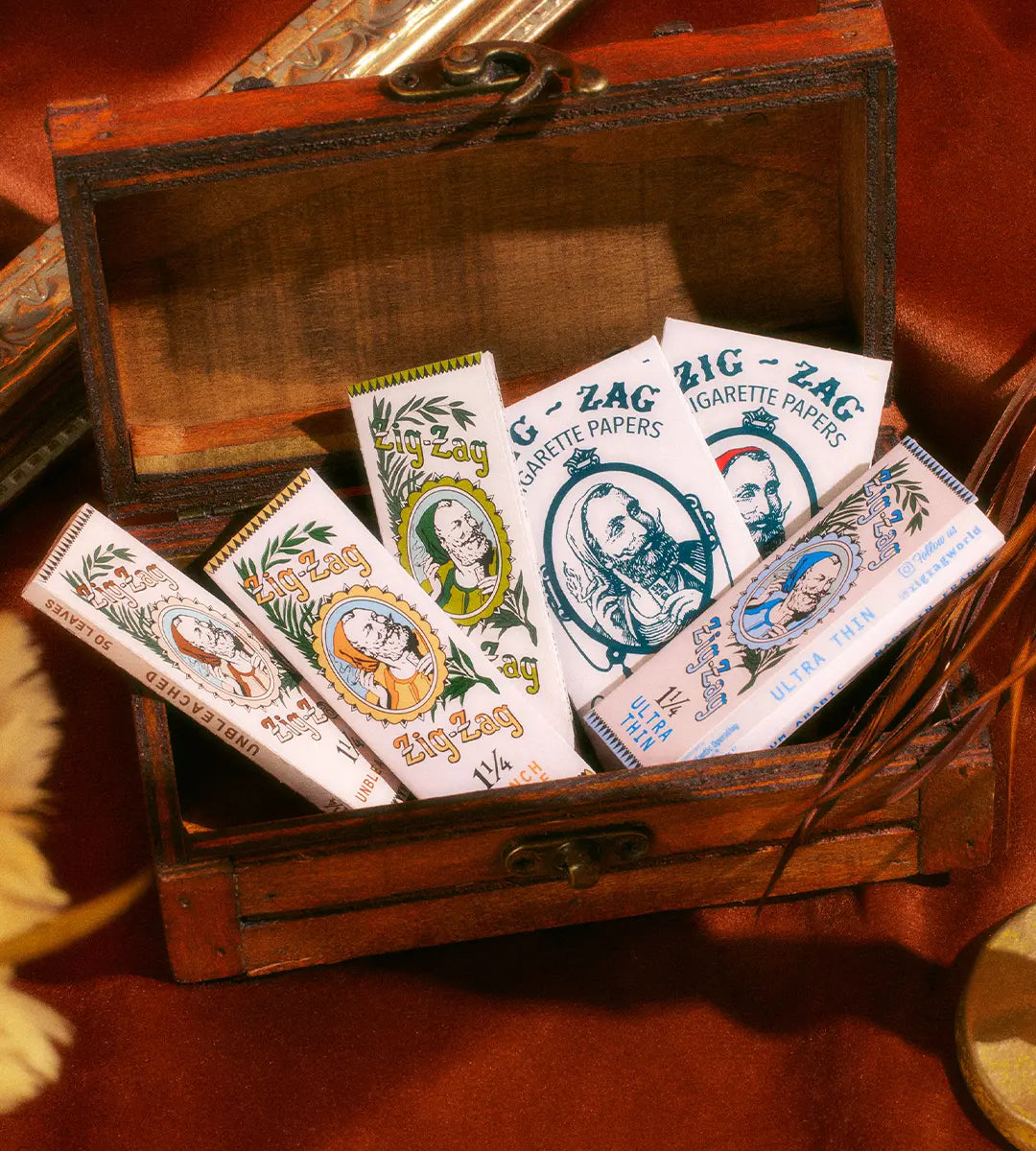
Trends move fast, but rolling papers don’t need a costume change every week. Legacy brands keep showing up because they stay familiar, consistent, and easy to rely on. For users, that steady track record matters more than novelty when you want your routine to run the same way today and next month.
Why Do Legacy Brands Still Win When Trends Move Fast?
Legacy brands still win because familiarity cuts decision fatigue and keeps routines consistent. You don’t have to relearn sizes, textures, or handling every time you restock. That stability turns a product into a default choice, not a debate you have with yourself at the counter.
We’ve seen it across decades of culture shifts. When a brand stays recognizable and keeps its format steady, it becomes the “grab it and go” pick.
Legacy Brands Don’t Need Reinvention to Stay Relevant
A legacy brand can stay current by keeping the stuff that matters stable.
-
Consistent paper feel and handling
-
Familiar formats you don’t have to relearn
-
Packaging you can spot fast
-
A history you can point to without a long speech
If you want the quick version of how we got here, our own rolling paper brand history timeline lays out the roots and the long runway behind the name.
Related: The Vintage Collection Rolling Papers: Legacy & Craftsmanship
Why Does Legacy Still Matter in Everyday Rituals?

Legacy matters in everyday rituals because rituals depend on repeatable steps. Familiar rolling papers reduce second-guessing, help your setup stay consistent, and keep your routine moving. When your daily flow matters, you stick with what you already know how to handle.
Rituals are built from tiny decisions that repeat. Pick the same paper. Keep the same storage spot. Restock the same size. Those habits stack up into muscle memory.
Familiar Papers Remove Uncertainty
When you already know how something handles, you skip the learning curve.
-
You know what size you’re grabbing
-
You know how it feels in your hands
-
You know how it fits with your usual accessories
Known Formats Reduce Adjustment
Changing formats creates friction. Even small changes can slow down a routine.
-
Different widths can change how you prep
-
Different packaging can change how you store
-
Different cut styles can change how you handle each sheet
Repetition Builds Trust Without a Speech
Trust isn’t a slogan. It’s what happens when the same choice keeps working.
A simple example is how people keep a standard rotation of papers and wraps at home. Our everyday rolling paper bundles exist for that exact reason: people like a setup they can repeat without turning it into a whole project.
Related: Zig-Zag Brand Equity
How Do Rolling Papers Become a Shared Cultural Reference?
Rolling papers become a shared cultural reference when they show up in enough hands, enough times, across enough years. People recognize the pack quickly, they remember learning with it, and they associate it with social moments. That’s how a product becomes shorthand for experience.
Some products stop being “a thing you buy” and start being “a thing you know.” That recognition is earned through time in the wild.
Recognition Travels Faster Than Explanation
You don’t need a pitch when a pack is instantly recognizable. That familiarity becomes a social shortcut.
Shared Items Turn Into Shared Memories
When something is passed around, it becomes part of the moment. Studies on sharing behaviors in tobacco contexts describe how sharing and gifting can carry social meaning in specific settings. We’re not endorsing any behavior here. We’re pointing out the cultural pattern: shared items often become social signals.
Time Is the Ingredient New Brands Can’t Rush
A newer brand can have great design. It can’t have decades of “I’ve seen that pack everywhere.”
That’s why legacy names stick in pop culture. They’ve been present long enough to become familiar background, then later, a reference point.
Related: The Rap Lyrics That Immortalized Zig-Zag: A Legacy Written in Bars
How Is Smoking Etiquette Learned, Not Marketed?
Smoking etiquette is learned through observation and repetition, not ads. People pick up cues from friends, older peers, and social settings. Those cues include how items are handled, how they’re shared, and how people pace the moment. Familiar brands often appear at the learning stage.
Social norms around tobacco use are widely described as socially mediated and learned through the environments people are in. That doesn’t mean anyone should start. It explains why etiquette tends to spread person-to-person instead of brand-to-person.
What People Learn First Is Usually Practical
Etiquette often starts with simple, unspoken rules like:
-
Keep your setup organized
-
Don’t make a mess of someone else’s table
-
Don’t hog shared items
-
Replace what you use if it’s a group stash
Familiar Products Become the “Teaching Tools”
People often learn with whatever is already around. If a legacy pack is the common default, it becomes part of the learning environment. That links the brand to the ritual, not to a trend cycle.
Etiquette Is Quiet, Not Performative
Most etiquette is about not turning the moment into a production.
That’s also why we keep our lineup straightforward. When adults 21+ want a consistent setup, our all natural organic lineup fits into routines without requiring a tutorial.
Why Does Consistency Beat Constant Reinvention?

Consistency beats constant reinvention because constant change adds friction. New formats force people to adjust storage, restocking habits, and handling. Consistent products let routines stay stable, which keeps decision-making simple and repeat purchases predictable.
Reinvention Often Creates “Hidden Work”
Hidden work is the stuff nobody budgets time for.
-
Relearning packaging layouts
-
Re-labeling storage
-
Fixing SKU confusion
-
Explaining changes to other adults in the household
Legacy brands reduce that. Instead of swapping everything out, they refine what already works.
Refinement Keeps the Routine Intact
A legacy brand can update materials or introduce new formats, while keeping the core experience familiar.
For example, our organic hemp cone collection stays aligned with a repeatable routine, since cones are a consistent format many adults already keep in rotation.
Related: Zig-Zag: A Century-Long Journey in the Paper Industry
Why Do Accessories Follow the Same Legacy Pattern?
Accessories follow the same legacy pattern because tools become part of muscle memory. Once your hands know a tool, switching costs show up fast. People stick with accessories that feel familiar, store well, and work the same way every time they reach for them.
That’s true for grinders, storage, wraps, and cones. The tool becomes part of “your setup,” not a new trend to keep up with.
A Personal Setup Runs on Repeatability
A setup is basically a tiny system. Systems hate surprises.
Here’s a quick reference table we use when thinking about consistency across rolling accessories:
Accessory |
What consistency helps with |
What changes can mess up |
Papers |
Stocking, storage, routine habits |
Format shifts, pack changes |
Wraps |
Same handling, same storage |
Size changes, texture changes |
Cones |
Repeatable prep, fewer variables |
Size changes, fit issues |
Grinder |
Familiar handling and output |
New tooth patterns, new feel |
If grinders are part of your regular lineup, our Zig-Zag x Flower Mill grinder collab is a good example of an accessory that aims for repeat handling and long-term use, not novelty for novelty’s sake.
The Goal Is Fewer Surprises, Not More Choices
People don’t avoid new stuff. They avoid having to troubleshoot basics during a routine. That’s also why our hemp wrap collection focuses on familiar formats that fit into existing setups.
Related: Zig-Zag Collectibles: The Allure of Vintage Items
How Is Legacy Built Through Use, Not Hype?
Legacy is built through repetition, not slogans. People return to the same rolling papers year after year because they’ve had consistent experiences with them. That steady presence becomes trust, then trust becomes habit, then habit becomes tradition that gets passed along. Time alone doesn’t earn trust, but time plus consistency gets you remembered.
What “Passed Down” Actually Looks Like
It often looks like:
-
A familiar pack that’s always in the same drawer
-
The same size you restock without thinking
-
The same accessories you keep because they work with your routine
-
The same brand name that shows up in stories from older friends
Trust Stays Practical
Trust is not a dramatic thing. It’s simple.
-
You know what you’re buying
-
You know how it fits into your routine
-
You know it won’t force a reset
Related: Zig Zag And Its Vintage Roots
What Should You Look for in Rolling Papers if You Want a Legacy-Style Routine?

If you want a legacy-style routine, look for rolling papers that stay consistent in format, feel, and availability. You want something easy to restock, easy to store, and easy to recognize. The goal is fewer adjustments over time, not constant switching.
Here’s what we recommend you check, without turning it into a shopping checklist disguised as advice.
Start With Format Consistency
Pick a format you can keep repeating.
-
Same size each time
-
Same pack style each time
-
Same storage method each time
Keep Accessories Aligned With Your Papers
A mismatch creates friction. Keep your setup simple.
-
One grinder you know well
-
One or two paper formats you rotate
-
A storage spot you always use
Choose Materials That Match Your Routine, Not a Trend Cycle
Materials matter most when they stay consistent with how you like your setup to run. Our Organic Hemp Cones in 1 ¼ and King Size Organic Hemp Cones are good examples of stable, repeatable formats when cones are already part of your system.
Related: What Makes the Best Roll Paper? A Look at Zig-Zag’s Timeless Standards
Conclusion: Why Legacy Brands Keep Earning the Repeat Pick
Legacy brands keep winning because they stay steady while trends spin. Familiar rolling papers remain part of routines because they reduce second-guessing, keep rituals consistent, and show up in cultural moments across generations. Zig-Zag’s story is proof that staying recognizable and reliable can outlast constant reinvention.
Choose rolling papers and accessories built for consistency, familiarity, and rituals you actually return to.
Share:
The Modern Carry Kit: What People Actually Keep on Hand Now
Roses, Reimagined: Why Mini Rose Cones Are the Ultimate Valentine’s Upgrade